Thursday, March 19, 2015

Moral Dilemma

Alligator River

1) Abigail: Abigail is the worse character in this story. I understand why she did what she did to see Gregory but to take pleasure in seeing Gregory get his ass beat just because he didn't agree with what she did is just plain cruel. Of course you're going to get upset if someone you love slept with another person so Abigail could've looked at her decision from Gregory's point of view and try to understand why he casted her aside but she had to get all butthurt and snitch on him even though Gregory didn't do anything wrong.

2) Slug: Slug, in my opinion wanted to be the Hero for Abigail but like in a sexual way. It is mentioned in the story that Slug felt compassion for Abigail. I guess he saw Gregory as a splinter in Abigail's finger. As soon as Slug takes Gregory out, then nobody will be in the way for Slug to get at Abigail. Also, Slug doesn't have any part in Abigail's and Gregory's business, it wasn't his decision to make to beat up Gregory. I know that Abigail didn't tell him to directly beat Gregory up, she just told him about her messed up situation. It was HIS decision to seek Gregory out and mess him up.

3) Sinbad: Sinbad is just a horny businessman. He left the option to Abigail to decide. The deal was basically sex=river trip to your lover or no sex=BYE. Even though he let Abigail decide, it's still disgusting and wrong to take advantage of people who are love-sick vulnerable. After Abigail and Sinbad slept with each other, he probably shook her hand and said, "NICE doing business with you". God, what a sick man.

4) Gregory: Gregory didn't really do anything wrong in this story except not listening or try to understand Abigail's side of the situation. After Abigail admitted to sleeping with another man, he immediately casted her away without even hearing her reasoning. Kinda like my mom when she's lecturing me.

5) Ivan: Ivan didn't do anything wrong. Abigail simply vented to him about her situation asked for his help. Even though they're friends in the story, it was still his decision whether or not to help her. It was just his decision to say no. I could understand being in his shoes. He probably wanted to prevent making the situation even more worse by being an instigator or he just didn't want to get into their business.

Thursday, February 12, 2015

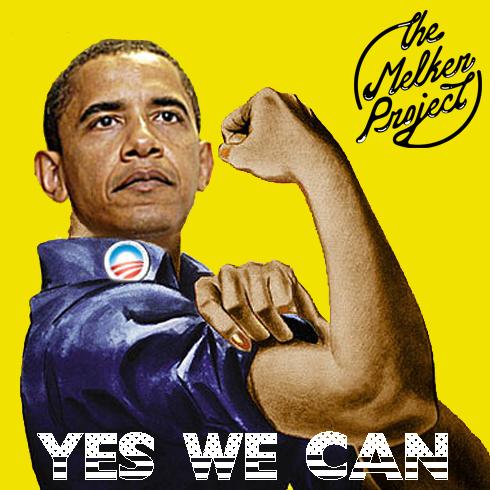
Yes We Can

          In Barack Obama's speech he used repeatedly used repitition and parallelism in pairs of 3 which resulted a pathos effect because the crowd was roaring with positivity. Obama also used a mixture of ethos and allusion because he made references to historical figures to make his speech stronger. His catchphrase is, "Yes We Can." basically the whole speech consisted of speaking, and the crowd cheering. It was pretty boring because the speech wasn't meant for us, it's made for people of politics, democratives and adults 18+. Will.i.am's music video was much more lively. During Obama's speech, everybody was bored but with Will.i.am's video everybody was attentive. We were more attentive because our young generation consists of visual arts and music which this video had. Plus the video didn't stay on just one shot, there were many celebrities present too, capturing more of our attention thus making us more attentive and waaaay less bored.

Wednesday, February 4, 2015

Ain't I A Woman? Response

           Sojourner Truth is trying to inform the reader how women rights were back in the day, especially colored women rights. In her poem, she discussed how women were treated like they can't get around their own problems so the men treat them ever so delicately, carrying them over drifts, giving them a boost when boarding a carriage and how women deserve the best place. Women had less rights then men and even less rights if you were colored. Soujourner writes a poem from her perspective: a colored woman.
          Based off of the poem, you could tell that Sojourner Truth wasn't an educated woman based off of her diction but what really mattered and added 10x more emphasis in her poem was her tone. Although she is not here today you could which parts of her poem where she was aggressive and simply being informative. Imagery wasn't one of the big pointers of her poem but throughout the poem, there were some parts where I could picture whats actually happening or what happened.

Saturday, January 31, 2015

Mood Analysis in The Raven

The Raven 
          Grief, it's an emotion people go through when experiencing loss. There are 5 stages of grief. 1st stage is denial/isolation. 2nd stage is anger. 3rd is Bargaining. 4th is Depression and finally the 5th stage is acceptance. Everybody goes through these stages differently, in their own pace. But do you know anybody who goes through these stages all at once? To express the central idea of mourning over a loss, Edgar Allen Poe uses mood in one of his famous works in the poetry genre section The Raven. The Raven is a poem about the narrator struggling over the 5th stage over the loss of his beloved, Lenore. A raven appears and the narrator is convinced that the raven was sent from the underworld to taunt him, to take fancy in his misery or to deliver his soul.
          

The BlackFish Argument

Rhetoric Appeals
          To be honest, all 3 appeals helped in convincing me that SeaWorld has it's dark secrets and effect innocents in doing so. In pathos appeal, when the orca's families are just crying out to their babies from across the net, that really got to me. Knowing that the orcas could've swam away when they got their chance, they actually stayed knowing that they won't ever see the babies again. Another example of pathos is when one of the mother orca at SeaWorld is using this long distance call to her daughter who had just been taken away from her. Pathos made me feel something but Ethos and Logos Appeal really made the director's argument stronger. Ethos used actual former SeaWorld trainers and also people who were victims of orca attacks or at least people related to them. To show both sides of the situation, the director also showed somewhat SeaWorld's perspective through a current employee. What really got to me in the Logos Appeal are the current trainers at SeaWorld LYING about the orca's lifespan and dorsal fins. Just lying to the people, covering up tragedies, blaming trainers instead of the animals, actual police reports and former trainer's experience and basically just being shady, that's all reason enough for me to believe that SeaWorld isn't what we thought it would be. The author isn't only targeting SeaWorld though. He or She is against owning a wild animals because unlike domestic animals, they're really unpredictable so you never know what might happen, they belong in the wild.

Friday, January 9, 2015

Theme Analysis in The Cask of Amontillado

The Cask of Amontillado
           Symbolism is a art used to represent something. For an example an owl may represent wisdom. Edgar Allen Poe, the author of The Cask of Amontillado used this technique along with a twist of irony to foreshadow events. Sneaky, talented little writer R.I.P. This story is about a man named Montresor who lives by his family's motto: "Nemo me impune lacessit" which means no one attacks me with impunity. Because Montresor was insulted by another man named Fortunado, he sought out revenge and it was well planned out. In the beginning of the story, a carnival was taking place. Fortunado dressed as a jester; jesters often play the fools in stories. Whereas Montresor was dressed in all black matched with a mask and cape. The color black itself frequently represents something ominous. Throughout the story, Edgar Allen Poe left symbolism clues for us to pick up on, like when Montresor handed Fortunado a wine bottle that was sitting by a skull, or when Montresor pulled a trowel from beneath his roquelaire.

Thursday, December 11, 2014

Theme Analysis

The Lottery
          The mood in the beginning of this story sounded innocent and happy because of the way the story opened up to. Warm sunshine, green grass and vibrant colored flowers. The mood also kind of made me feel safe in a way. The mood of the story shifted from innocent to sort of a dark, suspenseful and sinister feeling. I think this mood was tapped into after the children finished gathering stones then smiling at each other. The mood became more intense when the black box made it's presence, everybody was quiet and sort of afraid of the box. The mood in the beginning which was a rainbows-and-unicorns kind of feeling shifted greatly to ominous and sinister.
          In "The Lottery" Shirley Jackson used symbolism, tone/theme and imagery to convey the dark side of this all american town. This story shows one of mankind's darkest desires, in this case bloodlust and playing God and dumb superstitions. The people of this town believe that sacrificing a person will benefit them in the future. Although it's really,really,really, truly, very, very, very, mostly really unnecessary, tradition is habit that isn't hard to break. These are old fashioned people...really old fashioned people. This connects back the Aztec times when the natives used to sacrifice people to please their gods. The difference between these two events is that during Aztec times, sometimes the natives volunteer to be sacrificed, they aren't being held against their will like Tessie from "The Lottery". Aztecs volunteer humbly and "The Lottery" people JUST GOT IT ALL WRONG.